
Material
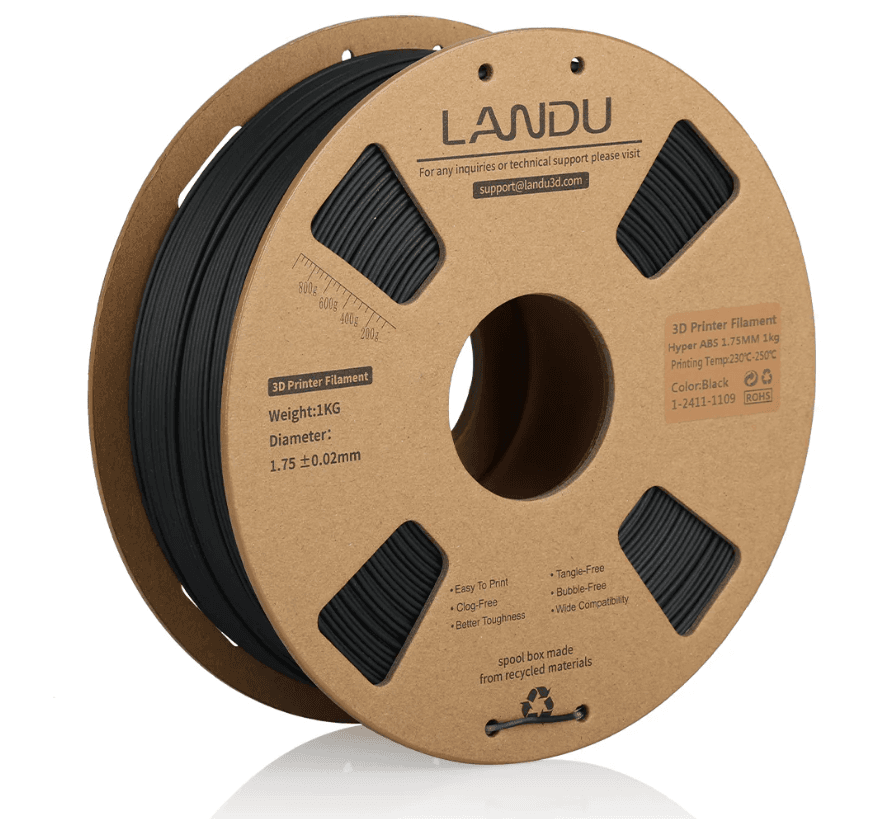
TPU filament — flexible, 1.75mm, 1kg spools
Rubber you can print. Gaskets, phone cases, grips, feet and anything that has to squash and come back — printed slowly, and ideally on a direct-drive extruder.
- Nozzle
- 220–235 °C
- Bed
- 40–60 °C
- Speed
- 15–30 mm/s
- Retraction
- Minimal or none
- Drying
- Often essential
Starting values — adjust to your own printer and conditions.
TPU in stock

What TPU is for
Anything that needs to flex and recover: gaskets and seals, phone and tool cases, vibration-damping feet, grips and handle covers, wheels and tyres for small robots, and protective corners.
It is also extremely abrasion-resistant and tough — a TPU part will survive being crushed in a way no rigid material will, and it will not shatter when dropped.
The 95A shore hardness we stock is the general-purpose choice: firm enough to print reliably, soft enough to be obviously flexible. TPU Pro has tighter diameter tolerance, which matters more than usual here because a flexible filament with a varying diameter is much more likely to buckle in the extruder.
What TPU is bad at
Speed. TPU has to be printed slowly. Push it and the filament buckles between the drive gear and the nozzle rather than being pushed forward, and extrusion stops.
Bowden printers. A long PTFE tube between the extruder and the hot end turns a flexible filament into a spring, which makes retraction and pressure control unpredictable. It is possible on a Bowden machine, but a direct-drive extruder makes it easy rather than a project.
Retraction. Aggressive retraction settings that work in PLA will jam TPU. Reduce distance sharply or disable it and accept a little stringing.
Dimensional precision. A flexible part deforms under its own weight and under the caliper, so hitting a tolerance is a different discipline from rigid materials.
Moisture. TPU absorbs water quickly and wet TPU prints with a bubbled, weak, hairy surface. Of everything here, this is the material most likely to need drying before use.
Getting a good result
Slow down before changing anything else. 20 mm/s solves most TPU problems on its own.
Print directly from a dry spool where you can, and dry for four to six hours at 50 °C if the filament has been open.
Reduce or disable retraction and increase minimum travel distance so the printer retracts less often.
Keep the filament path as short and as constrained as possible — the fewer places it can buckle, the more reliable the print.