
Material
PLA filament — 1.75mm, 1kg spools
The easiest material to print and the right default for most jobs. Rigid, dimensionally accurate, and forgiving of a badly tuned printer.
- Nozzle
- 200–220 °C
- Bed
- 50–60 °C
- Cooling
- 100% after layer 2
- Enclosure
- Not needed
- Drying
- Rarely needed
Starting values — adjust to your own printer and conditions.
PLA in stock
7 ranges shown
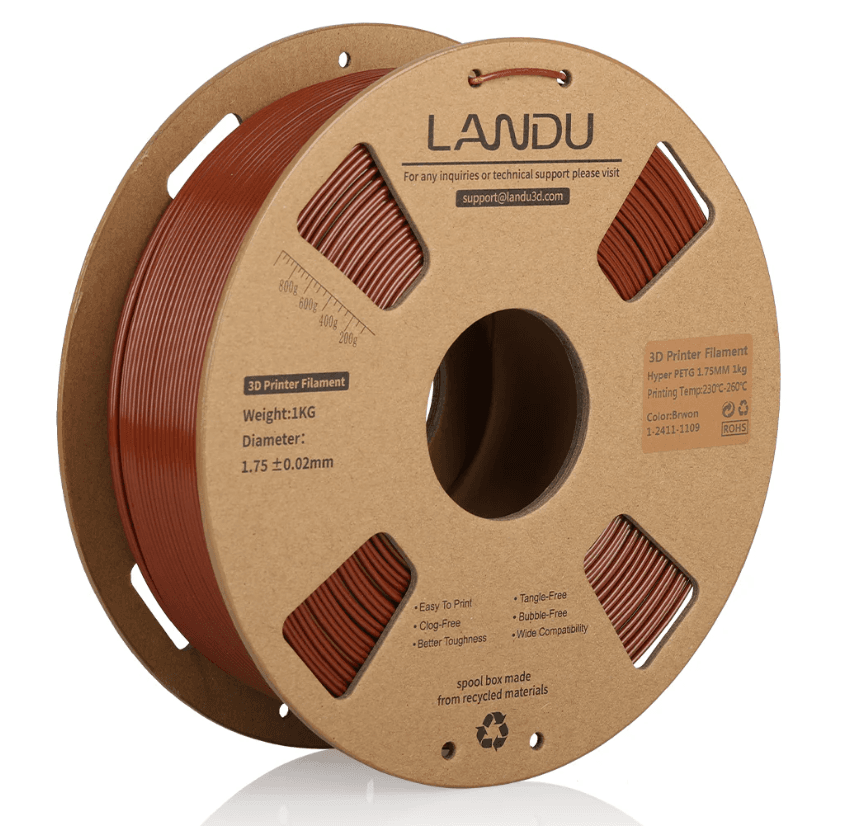
Landau PLA 1.75mm 1kg
Landau PLA 1.75mm 1kg — multiple colours, vacuum-sealed, fast UK delivery.
From £7.25 – £9.25
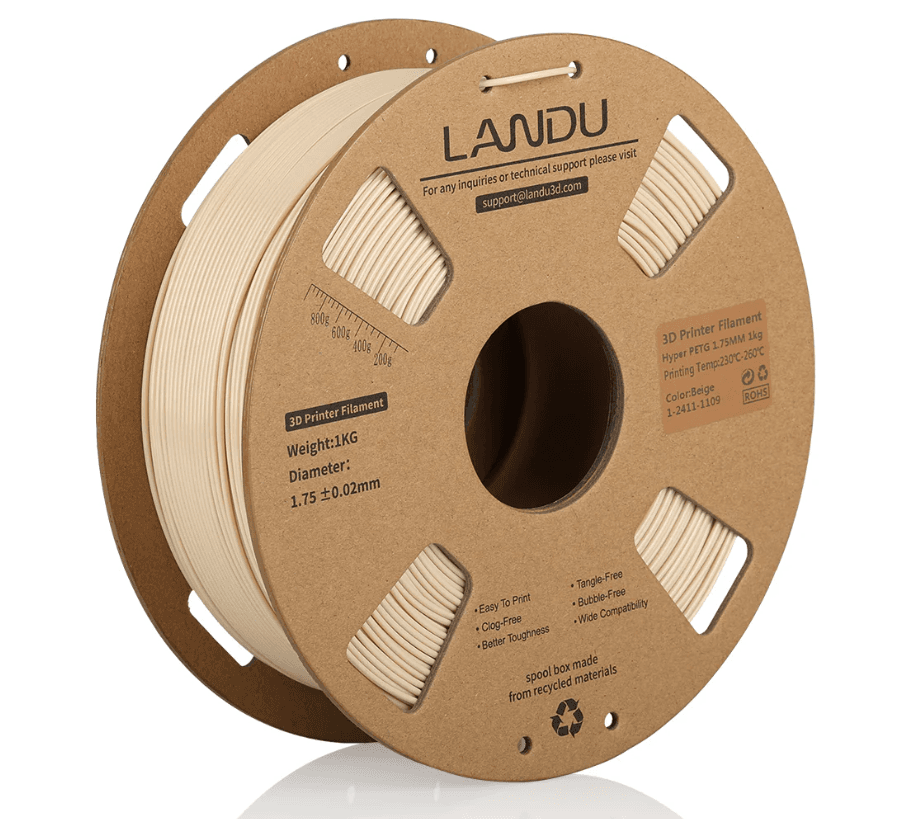
Landau PLA Basic 1.75mm 1kg
Landau PLA Basic 1.75mm 1kg — premium 3D printer filament.
From £6.00 – £8.50
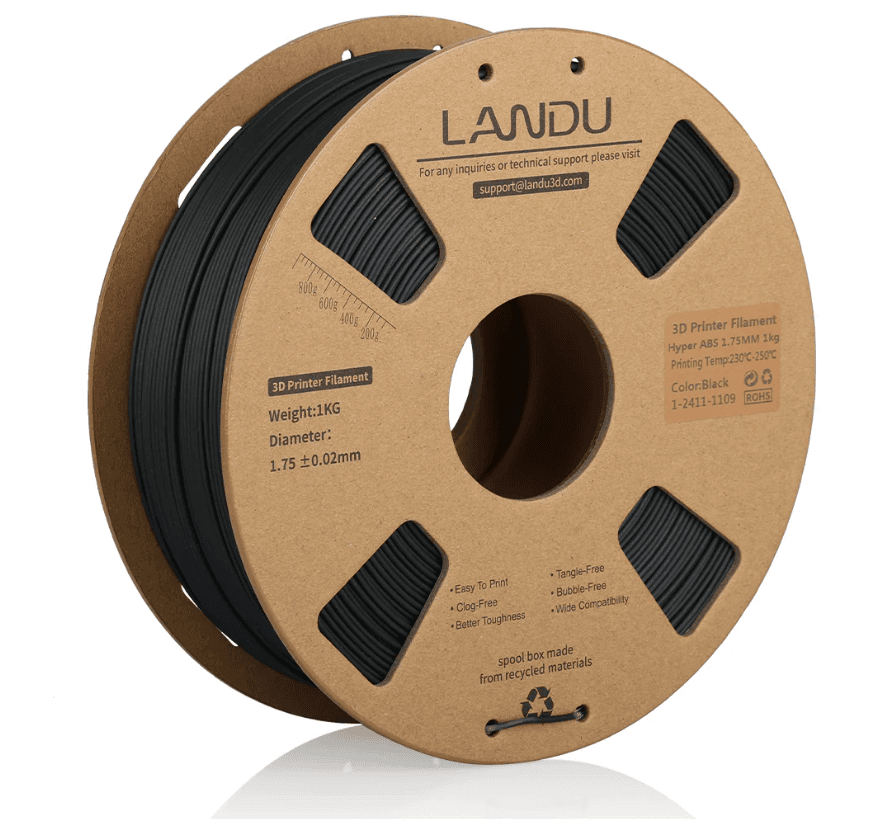
Landau PLA Pro 1.75mm 1kg
Landau PLA Pro 1.75mm 1kg — premium 3D printer filament.
From £10.00
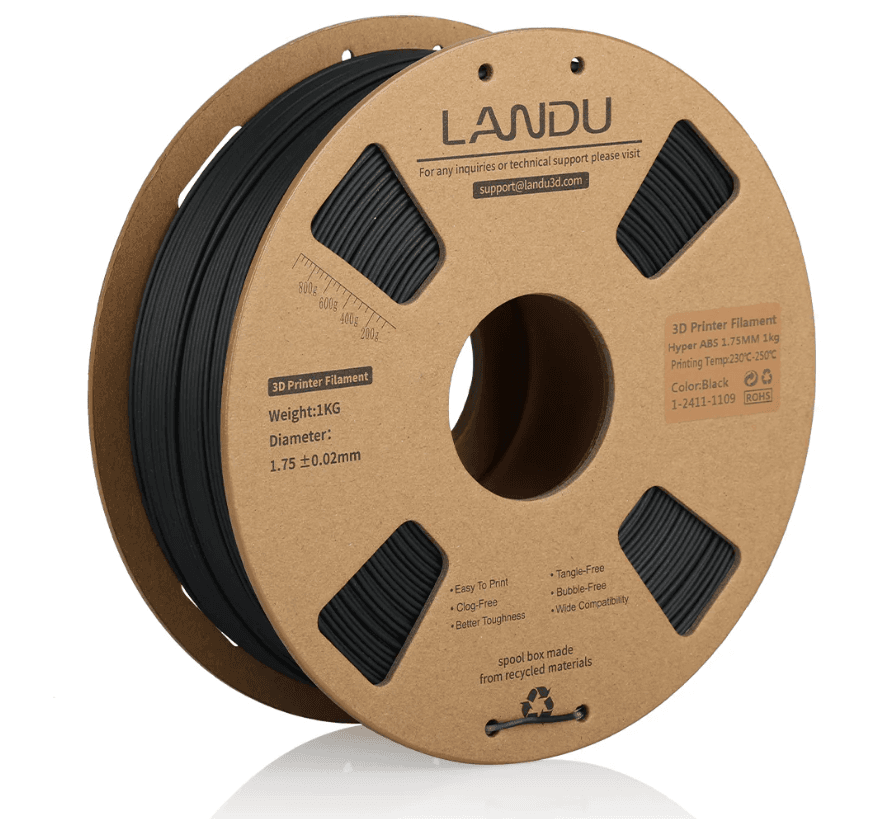
Landau PLA Matte 1.75mm 1kg
Landau PLA Matte 1.75mm 1kg — premium 3D printer filament.
From £10.00
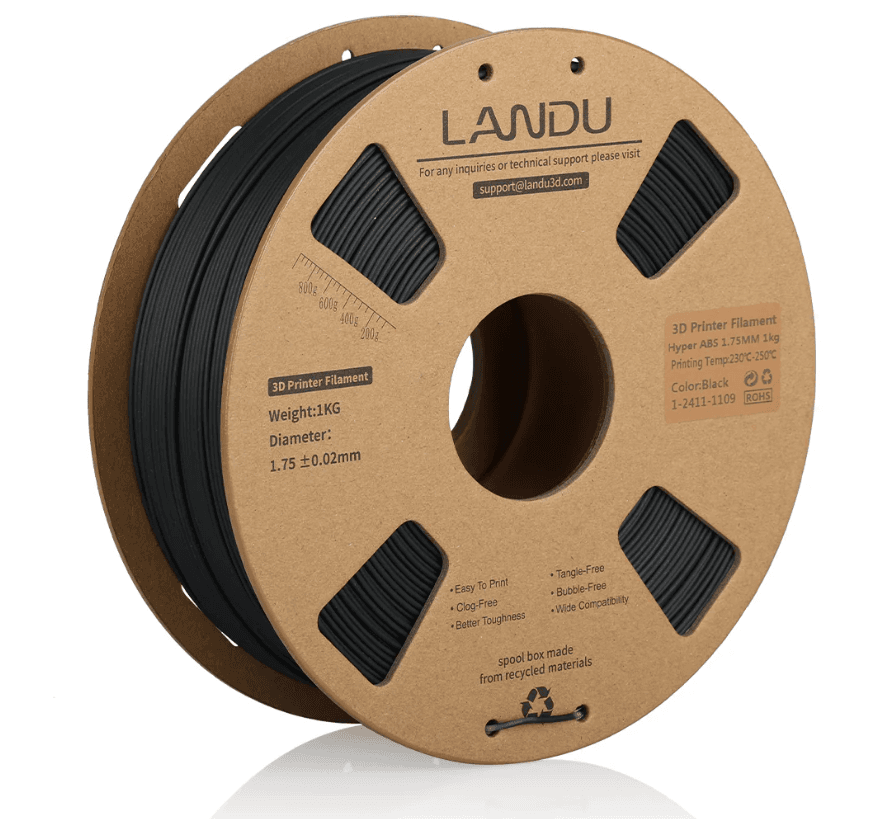
Landau PLA Silk 1.75mm 1kg
Landau PLA Silk 1.75mm 1kg — premium 3D printer filament.
From £11.00
 Out of stock
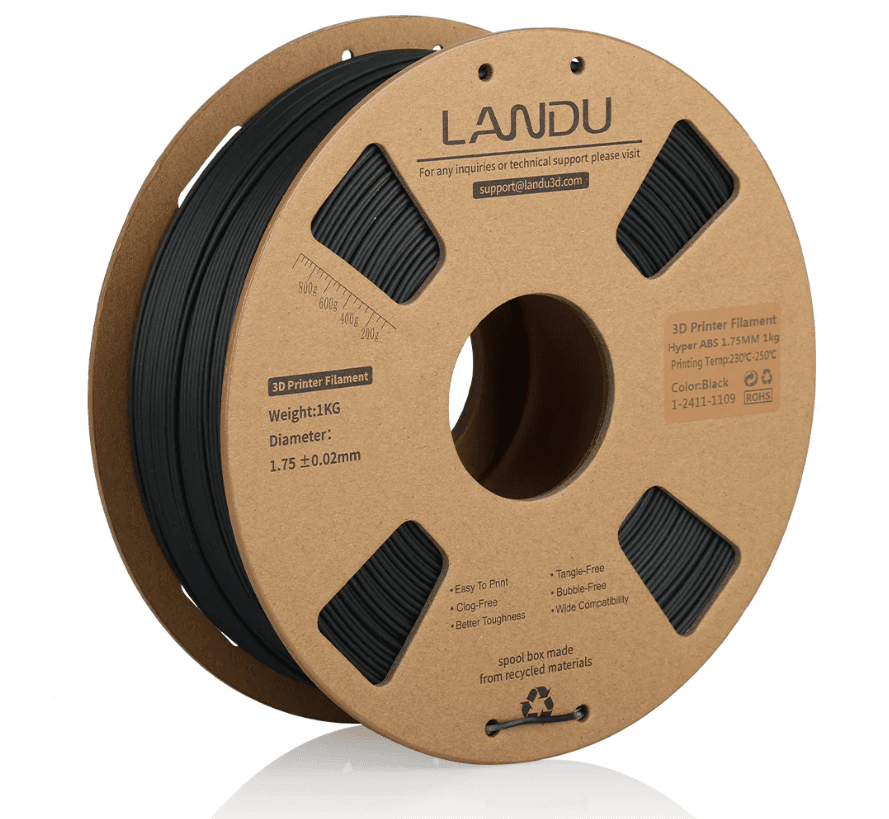
Landau Hyper PLA 1.75mm 1kg
Hyper PLA 1.75mm — high-speed printing without sacrificing surface quality.
From £10.00
 Out of stock
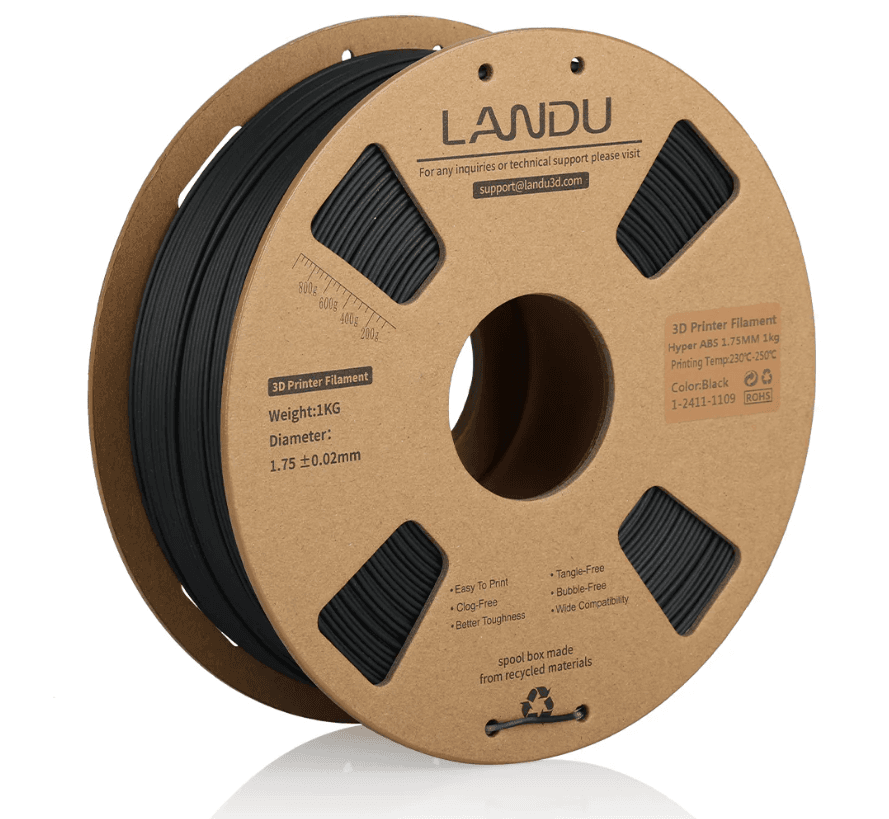
Landau PLA Carbon Fibre 1.75mm 1kg
Landau PLA Carbon Fibre 1.75mm 1kg — premium 3D printer filament.
From £11.00
What PLA is for
PLA is the material to reach for when the part does not need to survive heat, sunlight or sustained mechanical load. Prototypes, display pieces, tabletop miniatures, enclosures that live indoors, jigs, and anything where dimensional accuracy matters more than toughness.
It prints cooler than every other material we stock, does not need an enclosure, and warps so little that large flat parts are realistic on an open-frame printer. If a print fails in PLA, the cause is usually the printer rather than the filament — which is exactly why it is the right material to commission a new machine with.
It is also the most dimensionally accurate material here. A part designed to a tolerance will come out closer to that tolerance in PLA than in ABS or TPU, because it shrinks less on cooling.
What PLA is bad at
Heat. PLA begins to soften somewhere around 55–60 °C, which is a temperature a car interior reaches on a sunny day in Britain, never mind abroad. Anything that will sit on a dashboard, near a radiator, in a loft, or inside a warm enclosure should not be PLA.
Sustained load. PLA creeps — under constant stress it slowly deforms rather than springing back. A bracket that holds a shelf will sag over months. Use PETG or ABS for anything load-bearing.
Outdoors. UV degrades PLA and it becomes brittle. ASA is the material for outdoor parts.
Impact. PLA is stiff but brittle: it snaps rather than bending. Parts that get dropped, clipped on and off, or flexed want PETG.
Choosing between our PLA ranges
Standard PLA is the baseline and the cheapest way to print a lot of parts. PLA Basic is the same idea with tighter batch-to-batch colour consistency. PLA Pro is toughened — noticeably less brittle, which matters for functional parts that are still not hot.
PLA Matte trades a little strength for a diffuse surface that hides layer lines remarkably well; it is the range to use for anything display-facing. PLA Silk is glossier still and prints best slightly hotter and slower — treat the finish as the point rather than the strength.
Hyper PLA is formulated for high-speed printers. On a machine that can genuinely move, it keeps surface quality at flow rates where standard PLA starts to under-extrude. On a slower printer it behaves like good standard PLA and the premium is wasted.
PLA Carbon Fibre is stiffer and matte, with a slightly abrasive filler — it needs a hardened nozzle. It does not make parts stronger in the way people expect; it makes them stiffer and less prone to creep.
Getting a good result
Start at 210 °C on the nozzle and 60 °C on the bed and adjust from there. If layers separate, go up 5 °C; if you see stringing and blobs, come down 5 °C.
Run cooling at 100% from the second layer. PLA is the one material where more cooling is almost always better, and overhangs improve dramatically with it.
PLA rarely needs drying, but a spool left open in a damp workshop for months will start to pop and string. If in doubt, four hours at 45 °C fixes it.